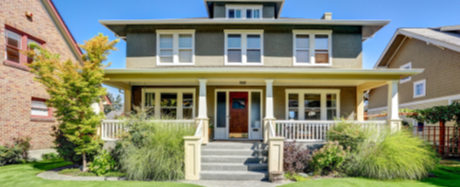
The Secret to Curb Appeal

  The huge, dark gray house was more than unkempt. With a crumbling front wall, missing shingles, thigh-high grass, broken window panes, and household items scattered across the yard, it looked sickly. THIS was Pam's dream house? "Ummmm, Pam, with all due respect," I said with my usual candor, "this place looks like it should have a black cloud and thunderbolt over it." She sighed. "But it was cheap, really cheap. You just have to look past the rundown condition and see the potential. How else could I afford a house this size?" Though Pam, an artist with an incredible eye, could look into the future and see what the house could become after cleaning and repair, I was more like the average home buyer — extremely dubious. If I had been the one house hunting, I wouldn't have stepped a foot on that property. I wouldn't have even slowed down the car. Pam did get the house for about half the price of comparable homes in the neighborhood — which means the seller made 50% less on the sale because he was unwilling to do the repairs needed to improve its curb appeal. It also took him over two years to find a buyer. "Curb appeal" is real estate talk for the initial appearance, and the impression it makes, of a house as seen from the road. It's what a buyer sees and feels as she parks across the street, crosses the road, strolls up the front walkway, and pauses to knock on the door. Curb appeal includes the overall neighborhood, the home's location on the block, the condition of the landscaping, the overall look of the house, and the attention to detail. A house needn't sport a cloud-and-thunderbolt look for buyers to bypass it for another. Sometimes little irritants — weeds, peeling paint, or tacky lawn ornaments — create enough doubt to make buyers go elsewhere. Luckily, most of these can be corrected with a little time, a bit of money, and an open mind. Where to Focus Most real estate experts agree the most important steps in preparing a house for listing are fixing the driveway, landscaping the yard, painting the exterior, and painting or replacing the front door. Driveway. Improving the driveway can be as easy and inexpensive as cleaning up oil spills, pressure washing to remove mildew, or moving extra cars elsewhere. For damaged driveways, excessive cracks can look worse when filled with patches — in that case, resurfacing may be necessary. Landscaping. Lawn and landscaping create the backdrop for the house. Like scenery in a play, it showcases the main attraction. Fill bare spots with grass plugs or sod, apply fertilizer, and water regularly. Add color with a flowerbed or two of annuals. A freshly mowed and edged lawn accented with flowers makes a strong first impression — clean and green, with a few splashes of color. Once the lawn is golf-course quality, don't spoil it with clutter: trim bushes and hedges, keep leaves raked and walkways swept, and store trash cans, hoses, tools, and toys out of sight. Lawn ornaments that make your life brighter may strike a buyer differently — put them in storage. Exterior paint. Want the most dramatic improvement for the best value? Paint the exterior — trim, window frames, shutters, gutters, downspouts, mailbox, and front door. Opt for neutral shades of white, light gray, or pale beige, which appeal to more buyers. If the existing paint is in good shape, just touch up everything else on the list to make the house look brighter. The front door. The front door is the transition area. At its best, it carries the pleasant look of the lawn — and the buyer's good opinion — over the threshold. At its worst, it undoes everything the lawn achieved. The buyer won't miss the entryway, so don't overlook it. Pressure clean the steps, railings, and door. Clean light fixtures, replace burnt-out bulbs, and fix the broken doorbell. If the door is solid and working, give it a fresh coat of paint. If it's damaged or cheaply made, invest in a new hardwood door. Then add the final touch: a brand-new doormat. After all the work spent sprucing up the place, you want buyers to feel welcome. By the way — Pam's place now looks like a European country house, complete with shadow boxes, a wrought-iron gate, and English gardens. But the very first thing she did was paint the exterior... soft beige. Spend a Little, Get a Lot   No time to keep the house clean? Hire a cleaning service to keep it show-ready while it's on the market.   If wall-to-wall carpet looks fine except for a couple of worn spots, have it professionally cleaned and cover the imperfect areas with small rugs.   Make stairways safe by clearing toys and slippery mats, securing the handrail, and installing good lighting.   If possible, list during peak real estate periods — spring and autumn.   Don't wait until the last minute to call professional painters; their schedules fill up. Book them as soon as you decide to sell.   Keep the lawn thick and green by fertilizing during the appropriate season. The Secret to Curb Appeal The huge, dark gray house was more than unkempt. With a crumbling front wall, missing shingles, thigh-high grass, broken window panes, and household items scattered across the yard, it looked sickly. THIS was Pam's dream house? "Ummmm, Pam, with all due respect," I said with my usual candor, "this place looks like it should have a black cloud and thunderbolt over it." She sighed. "But it was cheap, really cheap. You just have to look past the rundown condition and see the potential. How else could I afford a house this size?" Though Pam, an artist with an incredible eye, could look into the future and see what the house could become after cleaning and repair, I was more like the average home buyer — extremely dubious. If I had been the one house hunting, I wouldn't have stepped a foot on that property. I wouldn't have even slowed down the car. Pam did get the house for about half the price of comparable homes in the neighborhood — which means the seller made 50% less on the sale because he was unwilling to do the repairs needed to improve its curb appeal. It also took him over two years to find a buyer. "Curb appeal" is real estate talk for the initial appearance, and the impression it makes, of a house as seen from the road. It's what a buyer sees and feels as she parks across the street, crosses the road, strolls up the front walkway, and pauses to knock on the door. Curb appeal includes the overall neighborhood, the home's location on the block, the condition of the landscaping, the overall look of the house, and the attention to detail. A house needn't sport a cloud-and-thunderbolt look for buyers to bypass it for another. Sometimes little irritants — weeds, peeling paint, or tacky lawn ornaments — create enough doubt to make buyers go elsewhere. Luckily, most of these can be corrected with a little time, a bit of money, and an open mind. Where to Focus Most real estate experts agree the most important steps in preparing a house for listing are fixing the driveway, landscaping the yard, painting the exterior, and painting or replacing the front door. Driveway. Improving the driveway can be as easy and inexpensive as cleaning up oil spills, pressure washing to remove mildew, or moving extra cars elsewhere. For damaged driveways, excessive cracks can look worse when filled with patches — in that case, resurfacing may be necessary. Landscaping. Lawn and landscaping create the backdrop for the house. Like scenery in a play, it showcases the main attraction. Fill bare spots with grass plugs or sod, apply fertilizer, and water regularly. Add color with a flowerbed or two of annuals. A freshly mowed and edged lawn accented with flowers makes a strong first impression — clean and green, with a few splashes of color. Once the lawn is golf-course quality, don't spoil it with clutter: trim bushes and hedges, keep leaves raked and walkways swept, and store trash cans, hoses, tools, and toys out of sight. Lawn ornaments that make your life brighter may strike a buyer differently — put them in storage. Exterior paint. Want the most dramatic improvement for the best value? Paint the exterior — trim, window frames, shutters, gutters, downspouts, mailbox, and front door. Opt for neutral shades of white, light gray, or pale beige, which appeal to more buyers. If the existing paint is in good shape, just touch up everything else on the list to make the house look brighter. The front door. The front door is the transition area. At its best, it carries the pleasant look of the lawn — and the buyer's good opinion — over the threshold. At its worst, it undoes everything the lawn achieved. The buyer won't miss the entryway, so don't overlook it. Pressure clean the steps, railings, and door. Clean light fixtures, replace burnt-out bulbs, and fix the broken doorbell. If the door is solid and working, give it a fresh coat of paint. If it's damaged or cheaply made, invest in a new hardwood door. Then add the final touch: a brand-new doormat. After all the work spent sprucing up the place, you want buyers to feel welcome. By the way — Pam's place now looks like a European country house, complete with shadow boxes, a wrought-iron gate, and English gardens. But the very first thing she did was paint the exterior... soft beige. Spend a Little, Get a Lot   No time to keep the house clean? Hire a cleaning service to keep it show-ready while it's on the market.   If wall-to-wall carpet looks fine except for a couple of worn spots, have it professionally cleaned and cover the imperfect areas with small rugs.   Make stairways safe by clearing toys and slippery mats, securing the handrail, and installing good lighting.   If possible, list during peak real estate periods — spring and autumn.   Don't wait until the last minute to call professional painters; their schedules fill up. Book them as soon as you decide to sell.   Keep the lawn thick and green by fertilizing during the appropriate season.
Read More

Light Is for the Living

Professor Van Helsing approaches the house with trepidation — the lone light is from the moon, and even that scarcely illuminates the entryway. He wonders what horrors are hidden in the shadows... A buyer touring Count Dracula's castle might ask the same question: what's tucked into the dark corners and hallways of that eerie abode? Bram Stoker and the old Hollywood horror directors understood the power of lighting. A multitude of dirty, dangerous, unsightly surprises can lurk in the dark, waiting for the most opportune moment to make their presence known. But while Van Helsing overcame his fears and entered anyway, a homebuyer may not make it past an unlit foyer — no matter how attractive the home is. If buyers can't SEE it, they can't love it. Worse, they fear the unseen (often insignificant) and grow uneasy in a home that might be perfect for them. Lighting is a relatively inexpensive but effective way to highlight your home's best qualities and downplay the areas that are less flattering. Start with Natural Light The most desirable and inexpensive lighting is natural sunlight. Show your home during the day when the sun is bright: throw open blinds and shades, declutter windowsills, and wash the panes to let light in. It's also a good time to move Aunt Gertie's antique walnut wardrobe away from the window. To do its job, light needs to enter a room unhindered. Unless a window overlooks a neighbor's collection of rusting cars or a graffiti-covered wall, keep the curtains open when showing — it makes rooms feel bigger and more inviting. If the view is less than attractive, hang sheer curtains that let light in while gently distracting from the scene. Add Electric Light Where It's Needed If your house is dark or has few, narrow windows, take heart — a trip to the home improvement store fixes that fast. Walk slowly through the house, flip every switch, and look at each fixture and lamp. Replace burnt-out bulbs, and keep a running list of the bulb sizes you need. Do shades or domes have dead insects or dust inside? Clean them and see how much brighter the room looks. Are fixtures scratched, dented, or tarnished? If they can't be buffed or cleaned, consider replacing them — matching the style to your target buyer and your home's architecture. Traditional homes don't suit polished gunmetal fixtures; a 1970s pea-green mod hanging lamp may need to go if you're courting younger buyers. Light Can Fix a Room's Flaws Lighting minimizes a room's quirks and creates optical illusions — making a room seem wider, a ceiling higher, a hallway longer. Long, narrow condo hallways can become an art gallery with a little track lighting. Feel like the ceiling and floor are closing in? Skip hanging fixtures and use floor can lights that throw light up the wall to make ceilings feel higher. If the ceiling has cracks, do the opposite: light that flows downward pulls the eye away from the flaw. Bowing walls in older homes need light that runs straight up without hitting the wall — place lamps away from the wall, facing the ceiling. Often you can simply move existing fixtures to better spots. Life's little horrors, real or imaginary, tend to disappear when rooms are lit properly. Have a particularly small room? A mirrored wall makes it look double its size. Position that mirror across from a window and it reflects natural light, making the room brighter still. Use the Lights You Have It isn't enough to own the right fixtures — you have to use them. Even during the day, keep lights on in every room: hallways, closets, bathrooms, over the stove, in the oven, under hanging cabinets. At night, prepare for the evening buyer drive-by by leaving lamps on in rooms that face the street. After all, folks need to know Dracula isn't lurking in the shadows. The Most Expensive Mistake Sellers Make Failing to "showcase" their home. First impressions matter most. Experience shows that for every $100 in repairs a home needs, a buyer deducts $300 to $500 from their offer. Thoroughly clean and prepare your home before it hits the market if you want top dollar. Spend a Little, Get a Lot More than two cars in the driveway? Park the extras at a neighbor's to give your driveway and yard a spacious look. Remove oil and rust stains from concrete with commercial driveway cleaners from any auto or home improvement store. The basement needn't be spotless, but change the bulbs and clear the cobwebs before showing. Change the AC and furnace filters so the units run efficiently. If the washer and dryer are in the basement, add an area rug and a shelf for detergent to create a cozy laundry space. Check for termites by jabbing a pocketknife into the support beams near the foundation. If it sinks in easily, you may have a problem.
Read More

House Hacking in 2026

House Hacking in 2026: What the Hype Got Wrong and What Actually Works If you’ve spent any time on real estate TikTok in the last few years, you’ve probably seen the house hacking pitch. Buy a property, rent part of it out, let your tenants cover the mortgage. Live for free. Build wealth while you sleep. It sounds like the kind of thing that works great in a YouTube thumbnail and falls apart in real life. And honestly? Sometimes it does. But here’s what those videos usually get right even when they oversell the outcome: housing costs have outpaced wage growth by a wide margin, and for the right buyer, generating income from a property can make ownership viable when it otherwise wouldn’t be. The strategy is real. The “living for free” part is just the clickbait version of it. In 2026, the smarter question isn’t whether house hacking works it’s whether it’s the right fit for you, your market, and your numbers. What House Hacking Actually Means House hacking is straightforward in concept: buy a primary residence and generate income from it to help offset the cost of owning it. The definition is that simple. The execution has a lot of range. The term got a lot of breathless social media attention a few years ago often paired with promises of “living for free” or “having your tenants pay your mortgage.” That framing wasn’t entirely wrong, but it oversimplified things in ways that set some buyers up for disappointment. In 2026, the more useful way to think about house hacking isn’t about eliminating a housing payment. It’s about engineering a more manageable one. If a rental unit on a property generates $1,600 a month and the mortgage is $3,800, that $2,200 net payment might be very achievable where $3,800 wasn’t. That’s the real value not a free house, but a door that was otherwise closed, now open. The Most Common Ways Buyers Are Doing It The ADU Boom Accessory Dwelling Units often called ADUs, casitas, in-law suites, or backyard cottages have become the gold standard of modern house hacking. An ADU is a secondary living unit on the same lot as a primary home. It might be a detached structure in the backyard, a converted garage, or a basement with its own entrance. ADUs have exploded in popularity for a simple reason: they’re increasingly legal in places where they weren’t before, and both the financing and the rental markets now support them. Fannie Mae made a significant policy update that took full effect in March 2026, allowing buyers to count projected ADU rental income toward their qualifying income when applying for a mortgage. Specifically, lenders can now include ADU rental income on one-unit, owner-occupied purchase transactions, up to 30% of the borrower’s total qualifying income. That’s a meaningful change. It means a buyer looking at a home with an ADU can leverage that unit’s income potential before they ever sign a lease with a tenant. Multi-Generational Living House hacking isn’t always about renting to strangers. For a growing share of buyers, it means sharing a home and the costs that come with it with family. Multi-generational home buying is a sizable part of the market, with 14% of all home purchases nationally being multi-generational in the last year. Gen X buyers led the charge, with 19% choosing multi-generational homes, and it’s not hard to understand why.2 That generation is often caught supporting both aging parents and adult children at the same time, and a home designed to accommodate multiple adults under one roof can solve several problems at once: caretaking, privacy, and cost. Among multi-generational buyers, 41% said the primary reason for their purchase was to care for or support aging parents the highest share since tracking began in 2015. Another 23% said their main motivation was simply to spend more time with their parents.This isn’t niche behavior. It reflects a real demographic and economic reality that’s reshaping how families think about homeownership. The Classic Multi-Family Buying a duplex, triplex, or small multi-family property and living in one unit while renting the others is the original form of house hacking  and it still works. FHA loans allow buyers to purchase properties with up to four units with as little as 3.5% down, as long as the buyer occupies one unit as their primary residence. Eligible veterans can go even further with a VA loan, which requires no down payment at all on qualifying multi-unit properties. And for buyers who don’t fit either of those boxes, Freddie Mac’s Home Possible program allows qualified buyers to put as little as 3% down. The financing options for owner-occupied multi-family are genuinely more accessible than most buyers realize. For those willing to share a property line with their tenants, the income potential is typically higher than an ADU, and the strategy is time-tested. The Real Math Here’s the truth about house hacking in 2026: the “living for free” narrative that circulated on social media was never universally achievable, and it’s even rarer now. Interest rates have stabilized but remain elevated compared to the pandemic-era floor. Home prices, while not climbing at the same frenetic pace, are not meaningfully lower in most markets. Cash-flowing a property from day one generating enough rental income to cover the entire mortgage requires either very favorable market conditions or a large down payment. That’s not a reason to dismiss the strategy. It’s a reason to recalibrate expectations. The goal in 2026 isn’t to eliminate a housing payment. It’s to reduce it to something sustainable. In many cases, a well-chosen house hack turns an unaffordable property into a manageable one and that’s a significant win. Buyers who run realistic numbers, factor in vacancy periods and maintenance costs, and approach the strategy with patience tend to do well. Buyers who chase optimistic projections tend to struggle. Lenders have adjusted, too. The new Fannie Mae ADU income guidelines come with documentation requirements and a cap on how much of that income can be counted. This is a reasonable safeguard, not a barrier it filters out the wishful math and keeps the qualifying process grounded in real market data. Who This Works Best For First-time buyers facing an affordability gap. If income doesn’t support the mortgage on a home that checks all the boxes, a property with rental potential can bridge that gap both by reducing the net monthly payment and, in the case of ADU-eligible properties, by improving what a lender will approve in the first place. The sandwich generation. Gen X buyers, who are often supporting aging parents while still raising or housing adult children, have more motivation than any other group to maximize what a home does for them. A property designed for multi-generational living isn’t just a financial strategy; it’s a practical solution to a real caregiving reality. NAR research shows that among Gen X multi-generational buyers, households with three or more income earners are increasingly common, which further strengthens the financial case. Future investors learning the ropes. Living in a property while managing a rental unit is one of the best ways to learn real estate investing without the full risk exposure of a standalone investment property. A buyer who spends two or three years in a house hack and then moves to their next home can keep the first property as a full-time rental with tenant management experience already under their belt. What to Know Before Getting Started Zoning and local regulations are non-negotiable. ADU legality, short-term rental rules, and multi-family zoning vary dramatically by city and neighborhood. What’s allowed three blocks away may not be allowed on the property being considered. Unpermitted units create liability headaches that outlast the savings they generate. Doing things by the book from the start isn’t just the right approach it’s the only one that holds up over time. Run conservative numbers. Plan for vacancies. Budget for maintenance. Use realistic rent estimates based on comparable properties in the area, not best-case scenarios. If the math still makes sense when accounting for a month or two of vacancy each year plus routine repairs, it’s a solid plan. If it only works at 100% occupancy with top-of-market rents, it’s a risk. Be honest about lifestyle fit. Sharing a property with tenants whether strangers renting an ADU or family members in a multi-generational setup  comes with real tradeoffs. It requires a certain temperament and a willingness to handle the occasional uncomfortable conversation. Buyers who go in with clear boundaries and realistic expectations tend to thrive. Those who underestimate the interpersonal dimension often don’t. The Bottom Line House hacking is no longer a fringe idea for real estate investors. It’s a mainstream strategy that serious buyers in 2026 are using to navigate a market that doesn’t hand out easy answers. The fundamentals of homeownership building equity, gaining stability, and creating long-term wealth  still hold. House hacking simply acknowledges that the path to those benefits sometimes requires a little more creativity with how a property is used. Every neighborhood is different. Zoning rules, rental demand, and property potential vary widely, and the right house hack for one buyer might look completely different for another. If you’re wondering whether you’re the right fit for this strategy, that’s exactly the conversation worth having. Reach out and let’s dig into what it could actually look like for your market and your numbers. Curious what your home  or your next one  could actually do for you? Whether you’re weighing a house hack or just want a clear picture of where you stand, we’ll walk you through a complete home evaluation — real numbers for your market, no pressure and no obligation. It’s the same honest, no-hype conversation we’d want if the roles were reversed. Contact Us for a Complete Home Evaluation Prefer to talk? Call John Wicker at (404) 915-2589 or email wickerrealty@gmail.com. Sources Fannie Mae / Pennymac Announcement 26-25:https://corr.pennymac.com/non-delegated-announcements/announcement-26-25 NAR 2026 Home Buyers and Sellers Generational Trends Report:https://www.nar.realtor/research-and-statistics/research-reports/home-buyer-and-seller-generational-trends NAR Economists’ Outlook – Multi-Generational Homes:https://www.nar.realtor/blogs/economists-outlook/making-extra-room-at-the-table-multi-generational-trends Redfin – House Hacking: What Is It, and Why Is It So Popular?:https://www.redfin.com/blog/house-hacking/
Read More

What you can negotiate blog

What You Can Negotiate in a Home Purchase that Most Buyers Don’t Realize When most people picture negotiating on a home, they picture one number: the list price. You offer somewhere under the asking price, the seller counters, you settle in the middle, and whoever gives up the most ground “loses.” For a lot of buyers, that back-and-forth over the sale price is the negotiation. It’s only a fraction of it. The price is the headline. The real negotiation happens in the terms underneath it, and right now those terms are where the money is. Buyers have more room to ask than they’ve had in years. The market has tilted in their favor, and it’s showing up at the closing table: in 2025, 62.2% of buyers paid below the list price, and the typical below list buyer saved 7.9%  about $31,592 the biggest discount in over a decade. So here’s what actually separates the buyers who come out ahead. It isn’t the ones who push hardest on the price. It’s the ones who understand everything that’s on the table, and know which things are worth asking for. The Price-Only Trap It’s easy to assume a seller cares about one thing: the highest possible number. In practice, most care about more than that. They care about certainty, meaning whether the deal will actually close. They care about timing. They care about whether your financing will hold together or fall apart three weeks in. That matters for you, because it means you have more to work with than a single figure. A buyer who treats the offer as a package  price, terms, timing, and risk all together  can often create a better outcome than a buyer who just hammers on price and calls it a day. That’s why a clean, well-structured offer can beat a higher one: to the right seller, the certainty is worth more than the extra dollars. So before you anchor on a number, widen the lens. Here’s what else is on the table. The Money Levers Beyond the Price Some of the most valuable things you can ask for never touch the sale price at all. They change what you actually pay out of pocket. Start with a seller concession. This is money the seller agrees to credit you at closing, most often to cover part of your closing costs, which typically run 2% to 5% of the purchase price.2 Rather than cutting the sale price, the seller puts cash toward those costs, lowering what you need to bring on closing day. It’s worth asking for any time your upfront cash is the tightest constraint, which for a lot of buyers it is. And it’s far from a long shot right now: about 44% of sellers recently gave buyers a concession of some kind, close to the highest share on record. A rate buydown is one of the least understood levers, and one of the most valuable. When you buy down the rate, someone pays the lender an upfront sum in exchange for a lower mortgage interest rate. In a negotiation, you ask the seller to be the one who pays it. A buydown can be permanent, lowering your rate for the life of the loan, or temporary. A common version, the “2-1 buydown,” cuts two percentage points off your rate the first year and one point the second, then settles at the full rate. Builders have leaned on this hard: 64% were offering incentives like buydowns and closing-cost help earlier this year. It’s worth understanding why this can beat a price cut outright. Take $10,000 off the sale price and your monthly payment barely moves, maybe a few dollars on a 30-year loan. Put that same $10,000 toward buying down your rate, and you feel it in every payment for as long as you own the home. It’s the same money out of the seller’s pocket, but a far bigger result in yours. The Inspection Is Your Second Negotiation Most buyers treat the home inspection as a hurdle to clear: pass it, and you move on. It’s better understood as a second negotiation, and the leverage is usually built in, because an inspection on almost any home turns up something worth addressing. When it does, you generally have two options. You can ask the seller to make the repairs before closing, or ask for a credit instead so you can handle the work yourself afterward. The credit is often the cleaner win. You control the contractor, the timeline, and the quality of the work, instead of depending on a seller’s rushed, last-minute fix. A few rules of thumb. Focus on what genuinely matters, meaning health, safety, and the big-ticket systems like the roof, HVAC, or foundation, rather than nickel and diming every cosmetic flaw. Consider asking for a home warranty to cover the things that tend to break after you move in. And treat the report as a planning tool, not just a bargaining chip. A fifteen year-old water heater isn’t a reason to walk away. It’s a heads up that helps you budget. Terms and Timeline: The Wins That Aren’t About Money One of the most powerful levers costs you nothing: flexibility. To a seller, time is often worth as much as dollars. Say the sellers need a few extra weeks in the home because their next place isn’t ready. Offering a rent back, which lets them stay on for a short period after closing, can make your offer the one they choose even over a higher bid. Or maybe they need to close fast, and you’re in a position to deliver. The closing date, the possession date, the length of your contingency periods, even how your earnest money is structured: all of it is something you can shape. The strategic move is simple. Give the seller the timeline they need, and you’ll often get the terms you want in return. What Actually Comes With the House This is the simplest ask of all, and the one buyers most often forget to make: what physically stays with the house. Appliances, window treatments, the mounted TVs, the washer and dryer, sometimes even furniture or the patio set you admired during the showing. A lot of it is negotiable. The law draws a line between fixtures, which are generally included, and personal property, which generally isn’t, and that line is exactly where a quick ask can pay off. One rule matters above the rest: get every extra written into the contract. A friendly “sure, we’ll leave the fridge” during a showing means nothing if it isn’t on paper. And if there’s something you want, ask for it. The worst answer you’ll get is no. How to Actually Use the Whole Menu Knowing what’s negotiable is the easy part. Using it well is what turns a list of asks into a better deal. The buyers who succeed don’t fire off every possible demand at once. They lead with what the seller values most, group their requests thoughtfully, and avoid the death-by-a-thousand-cuts approach that makes a seller dig in. Above all, they read the seller’s real motivation, and that’s where a skilled agent earns their keep. It’s no accident that 88% of buyers work with an agent, and that the help they value most is negotiating the terms of the deal. A calm, well prepared buyer with a clear strategy almost always does better than an aggressive one throwing elbows. The goal isn’t to beat the seller. It’s to structure a deal that works for both sides, and to make sure you’re not leaving value on the table you never knew was there. If you’re getting ready to buy, this is exactly the kind of thing worth talking through before you write an offer. I’m glad to walk through everything you could be asking for in your particular situation. No pressure, just a clear picture so you can make a confident decision. Curious what your home — or your next one — could actually do for you? Whether you’re getting ready to write an offer or just want a clear picture of where you stand, we’ll walk you through a complete home evaluation — real numbers for your market, no pressure and no obligation. It’s the same honest, no-hype conversation we’d want if the roles were reversed. Contact Us for a Complete Home Evaluation Prefer to talk? Call John Wicker at (404) 915-2589 or email wickerrealty@gmail.com. Sources Redfin — Homebuyers Are Scoring the Biggest Discounts in 13 Years Redfin — What Are Closing Costs and How Much Will You Pay? Redfin — 44% of Home Sellers Are Giving Concessions to Buyers NAHB / WTOP — Builder Incentives and Rate Buydowns NAR — 2025 Profile of Home Buyers and Sellers
Read More

2026 Mid-Year Market Check-In

2026 Mid-Year Market Check-In: What the First Half of the Year Tells Us About Your Next Move For the past two years, a lot of people have been waiting on the housing market to do one specific thing: drop rates dramatically and “unfreeze.” That was the plan for buyers and sellers alike. I’ll move when rates come down. That big drop never fully arrived. And the market changed anyway. It didn’t unfreeze. It thawed slowly. Halfway through 2026, buyers in many markets have more homes to choose from, more time to decide, and more room to negotiate than they’ve had in years. Sellers are adjusting to a slower, more selective market. It’s not a perfectly balanced market everywhere. But compared to the pandemic-era bidding wars, and the frozen, locked-up market that followed them, it looks a lot more balanced. Nobody rings a bell when a market becomes more negotiable. Booms and crashes make headlines; a market quietly returning to normal doesn’t. So consider this your mid-year bell: here’s what the first half of 2026 actually tells us, and what it means whether you’re buying, selling, or staying put. More Homes, More Time, More Conversation Start with what changed. There are meaningfully more homes on the market than during the low-inventory years: about 1.56 million listings nationally as of June, or 4.6 months of supply.1 That’s not a glut, and the growth has been leveling off as some would-be sellers step back rather than chase the market. But for buyers who spent years picking from slim inventory, it’s a real difference. And the market isn’t frozen. Sales bounce around from month to month, but they’re running ahead of where they were a year ago.1 People are moving without the dramatic rate drop everyone was waiting on. The bigger shift is in how deals come together. Negotiation is a standard part of the process again. Nearly half of sellers, 46% in May, gave buyers some form of concession, a record for that month.2 Price reductions are far more common than they were during the frenzy. For buyers, that’s a signal of how negotiable this market is, not necessarily a problem with the home. Inspections, repairs, closing costs, timing: these are conversations again, not sacrifices you make to win a bidding war. More negotiation doesn’t mean buyers control every market. A well-priced home in a tight area can still sell fast, sometimes with competition. What it means for you: if you’re buying, the list price is no longer the whole conversation. A reduced price is often an invitation to look closer, not a reason to stay away. If you’re selling, the lesson runs the other way: strategy matters more than optimism. The goal is to price right on day one so you never need the cut. Homes that reduce are usually correcting a pricing decision the market already voted on. Rates Are No Longer the Only Story Mortgage rates spent the first half of the year drifting rather than diving. The average 30-year fixed rate was 6.49% in mid-July, a shade better than the 6.72% from a year ago, but nowhere near the dramatic relief people were holding out for.3 The market improved anyway. Affordability has quietly been getting better. Buying power stretches a little further than it did a year ago, as income growth outpaces home-price growth in most of the country. Not dramatically. Cumulatively. And the people transacting in 2026 aren’t necessarily the ones who timed the market perfectly. They’re the ones whose lives changed: a new job, a growing family, a downsize, a divorce, a retirement, a relocation. Life decisions, not rate decisions, are driving moves again. Waiting has a cost too. I’ve watched plenty of buyers hold out for a rate that never arrived while their needs kept changing, like the family that outgrew their space two years ago, or the retiree maintaining a house that stopped making sense. If the only thing keeping you on the sidelines is a number, it’s worth running the math on what waiting is actually costing you. What it means for you: rates still shape affordability, but they’re not the whole plot anymore. Price, concessions, inspection terms, timing, and the right property all shape the outcome too. You can’t control the rate you can control almost everything you negotiate around it. What the National Numbers Can Miss The national market barely exists. Conditions differ sharply by region, price point, and property type. Some markets have tipped genuinely toward buyers, with more listings, longer timelines, and real leverage. Others remain stubbornly tight, with limited supply and quick sales. Even price direction is diverging: some regions are still posting solid annual gains while others have flattened out.1 Two buyers with similar budgets can have completely opposite experiences depending on where and what they’re shopping for. The national median price tells the same story in one number: $440,600 in June, up just 1.8% from a year ago.1 A modest gain, but that one number is an average of markets moving in different directions. This is exactly where the gap between the headline and your street gets expensive. What it means for you: national headlines tell you the direction of the market. They can’t tell you what your home is worth, what your competition looks like, or how much negotiating room exists in your neighborhood. Only a local read can. What It Means for You — Buyers, Sellers, and the Staying-Put A more balanced, more local market rewards preparation over timing. What that looks like depends on whether you’re buying, selling, or staying put. If you’re buying: you have more choice and, in many markets, more leverage than you’ve had in years. Use the time this market gives you: inspect thoroughly, negotiate genuinely, and compare concessions, not just list prices. A seller-paid rate buydown or closing-cost credit can sometimes do more for your monthly payment than a modest price cut. First-time buyers are finding more entry points than they have in years, making up 33% of June’s buyers1, but affordability still requires discipline. More options doesn’t mean easy. If you’re selling: you can absolutely still win in this market. But pricing right from day one, presenting well, and expecting negotiation are now the job description. “Testing the market” with an ambitious price costs real time and real money. The homes that sit are usually the ones that priced for 2021. If you’re staying put: a calmer market is a good moment for a low-stakes check-in. What’s your home worth now? What does your equity look like? Does this home still fit your life? No urgency, just awareness. The forecast for the second half of the year calls for modestly better sales, not fireworks4, which means this planning window stays open. Across all three: the second half of the year favors people who know their local numbers, not people waiting for a national signal. Balance doesn’t pick winners. Preparation does. The Second Half Belongs to the Prepared That’s the mid-year picture: more choice, steadier rates, more negotiation, and conditions that are sharply local. For the first time in a while, this is a market you can plan in rather than react to. The national story is the easy part — you just read it. The part you can’t Google is what it means on your street, for your home, on your timeline. If you’re wondering what this market means for your specific situation, reach out. Whether you’re thinking about buying, selling, or just want to know where your home stands, that’s exactly the kind of conversation I’m happy to have, no pressure attached. Curious what this market means for your home — or your next one? Whether you’re thinking about buying, selling, or just want to know where your home stands, we’ll walk you through a complete home evaluation — real numbers for your street and your neighborhood, no pressure and no obligation. It’s the same honest, no-hype conversation we’d want if the roles were reversed. Contact Us for a Complete Home Evaluation Prefer to talk? Call John Wicker at (404) 915-2589 or email wickerrealty@gmail.com. Sources Existing-Home Sales Report, June 2026 — National Association of REALTORS® 46% of Home Sellers Gave Concessions to Buyers in May — Redfin Primary Mortgage Market Survey, July 9, 2026 — Freddie Mac NAR Chief Economist Lawrence Yun: Home Sales Expected to Improve in Second Half of 2026 — National Association of REALTORS®
Read More

The Loan That Lets You Buy in Forsyth & Fulton With Nothing Down

The Loan That Lets You Buy in Forsyth & Fulton With Nothing Down   Most people believe the same two things about buying a home: you need a big down payment, and you’ll be stuck paying mortgage insurance for years. For a lot of would-be buyers, that’s the wall. They assume the down payment is the price of admission, so they keep renting and keep waiting. Here’s the part most buyers never hear: that wall isn’t always there. Through our lending partner, Synovus Bank, there’s a specialty conventional loan built to take those exact barriers off the table — and for eligible buyers in Forsyth and Fulton County, it can mean getting into a home with little, or nothing, down. What Makes This Loan Different This isn’t a first-time-buyer program with a long list of catches. It’s a 30-year, below-market fixed-rate conventional loan for a primary residence, and it’s open to both first-time and repeat buyers. A few things set it apart: 100% financing. Eligible buyers can finance the full purchase — $0 down — on loan amounts up to $500,000. No PMI. Most low-down-payment loans pile on private mortgage insurance every month. This one doesn’t — even with less than 20% down — which keeps your payment lower. A below-market rate. The rate sits under current market, an estimated savings of about $5,000 a year for a typical buyer. No income limits. Plenty of affordable-lending programs shut you out if you earn too much. This one has no income ceiling, so strong earners qualify too. How Much You Can Finance   The program works in two simple tiers. On loan amounts up to $500,000, eligible buyers get 100% financing — nothing down. On loan amounts from $500,001 up to $832,750, you can finance up to 89.9%. That upper tier is what makes this a fit for move-up buyers too, not just first-timers — a real advantage in a market where Forsyth and Fulton prices climb quickly. The Extras That Stretch Your Dollars Further A few more levers make the out-of-pocket math even friendlier. Sellers may contribute up to 9% toward your prepaid items, closing costs, or an interest-rate buydown — a meaningful amount in a market where sellers are giving concessions again. For buyers who need a hand with the rest, the program allows a combined loan-to-value of up to 110% with approved down-payment assistance. The only real cash you’re required to bring is a minimum of $500 of your own funds toward the transaction. Who It’s For, and Where The loan is available in select areas — including our Forsyth and Fulton County markets — for 1-unit single-family homes, townhomes, and condominiums used as a primary residence. If you’re a first-time buyer trying to clear the down-payment hurdle, or a repeat buyer who’d rather keep your cash working than sink it into a down payment, this is worth a conversation. As with any mortgage, approval comes down to credit, the property, and the program guidelines so the honest next step is simply to see where you stand. The Next Step Is a Short Conversation Programs like this don’t stay quiet for long, and terms can change. If buying is anywhere on your horizon, it’s worth finding out now whether you qualify  before you fall for a home and start scrambling on financing. I’ll walk you through it and connect you with the right lending team, so you get a clear, straight answer with no pressure attached. And if someone you care about has been stuck on the “we’ll buy when we’ve saved a down payment” treadmill, send them this. It might be the thing that changes their timeline. Curious what you could actually qualify for? Whether you’re ready to start looking or just want to know if $0 down is on the table for you, we’ll walk you through your options and get you a straight answer on pre-qualification — real numbers for your situation, no pressure and no obligation. It’s the same honest, no-hype conversation we’d want if the roles were reversed. Contact Us to Get Pre-Qualified Prefer to talk? Call John Wicker at (404) 915-2589 or email wickerrealty@gmail.com. Equal Housing Lender. Financing is provided by Synovus Bank, Member FDIC, and is subject to credit approval, income and asset verification, appraisal, and program eligibility requirements. Not all applicants will qualify. 100% financing applies to eligible borrowers on loan amounts up to $500,000; up to 89.9% financing is available from $500,001 to $832,750. Rates, terms, and program availability are subject to change without notice and do not constitute a commitment to lend. Estimated savings are illustrative and vary by loan amount, rate, and circumstances. Wicker Realty Specialists LLC is a licensed real estate brokerage, not a mortgage lender, and does not make credit decisions or set loan terms. Contact a Synovus mortgage professional for details specific to your situation. Synovus Bank NMLS #[number].
Read More
Search Property Listings