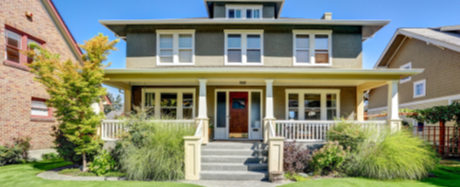
Small fixes, big impression — how curb appeal wins buyers
The Secret to Curb Appeal
The Secret to Curb Appeal
The huge, dark gray house was more than unkempt. With a crumbling front wall, missing shingles, thigh-high grass, broken window panes, and household items scattered across the yard, it looked sickly. THIS was Pam's dream house?
"Ummmm, Pam, with all due respect," I said with my usual candor, "this place looks like it should have a black cloud and thunderbolt over it." She sighed.
"But it was cheap, really cheap. You just have to look past the rundown condition and see the potential. How else could I afford a house this size?"
Though Pam, an artist with an incredible eye, could look into the future and see what the house could become after cleaning and repair, I was more like the average home buyer — extremely dubious. If I had been the one house hunting, I wouldn't have stepped a foot on that property. I wouldn't have even slowed down the car.
Pam did get the house for about half the price of comparable homes in the neighborhood — which means the seller made 50% less on the sale because he was unwilling to do the repairs needed to improve its curb appeal. It also took him over two years to find a buyer.
"Curb appeal" is real estate talk for the initial appearance, and the impression it makes, of a house as seen from the road. It's what a buyer sees and feels as she parks across the street, crosses the road, strolls up the front walkway, and pauses to knock on the door. Curb appeal includes the overall neighborhood, the home's location on the block, the condition of the landscaping, the overall look of the house, and the attention to detail.
A house needn't sport a cloud-and-thunderbolt look for buyers to bypass it for another. Sometimes little irritants — weeds, peeling paint, or tacky lawn ornaments — create enough doubt to make buyers go elsewhere. Luckily, most of these can be corrected with a little time, a bit of money, and an open mind.
Where to Focus
Most real estate experts agree the most important steps in preparing a house for listing are fixing the driveway, landscaping the yard, painting the exterior, and painting or replacing the front door.
Driveway. Improving the driveway can be as easy and inexpensive as cleaning up oil spills, pressure washing to remove mildew, or moving extra cars elsewhere. For damaged driveways, excessive cracks can look worse when filled with patches — in that case, resurfacing may be necessary.
Landscaping. Lawn and landscaping create the backdrop for the house. Like scenery in a play, it showcases the main attraction. Fill bare spots with grass plugs or sod, apply fertilizer, and water regularly. Add color with a flowerbed or two of annuals. A freshly mowed and edged lawn accented with flowers makes a strong first impression — clean and green, with a few splashes of color. Once the lawn is golf-course quality, don't spoil it with clutter: trim bushes and hedges, keep leaves raked and walkways swept, and store trash cans, hoses, tools, and toys out of sight. Lawn ornaments that make your life brighter may strike a buyer differently — put them in storage.
Exterior paint. Want the most dramatic improvement for the best value? Paint the exterior — trim, window frames, shutters, gutters, downspouts, mailbox, and front door. Opt for neutral shades of white, light gray, or pale beige, which appeal to more buyers. If the existing paint is in good shape, just touch up everything else on the list to make the house look brighter.
The front door. The front door is the transition area. At its best, it carries the pleasant look of the lawn — and the buyer's good opinion — over the threshold. At its worst, it undoes everything the lawn achieved. The buyer won't miss the entryway, so don't overlook it. Pressure clean the steps, railings, and door. Clean light fixtures, replace burnt-out bulbs, and fix the broken doorbell. If the door is solid and working, give it a fresh coat of paint. If it's damaged or cheaply made, invest in a new hardwood door. Then add the final touch: a brand-new doormat. After all the work spent sprucing up the place, you want buyers to feel welcome.
By the way — Pam's place now looks like a European country house, complete with shadow boxes, a wrought-iron gate, and English gardens. But the very first thing she did was paint the exterior... soft beige.
Spend a Little, Get a Lot
- ? No time to keep the house clean? Hire a cleaning service to keep it show-ready while it's on the market.
- ? If wall-to-wall carpet looks fine except for a couple of worn spots, have it professionally cleaned and cover the imperfect areas with small rugs.
- ? Make stairways safe by clearing toys and slippery mats, securing the handrail, and installing good lighting.
- ? If possible, list during peak real estate periods — spring and autumn.
- ? Don't wait until the last minute to call professional painters; their schedules fill up. Book them as soon as you decide to sell.
- ? Keep the lawn thick and green by fertilizing during the appropriate season.
Wicker Realty Specialists, LLC Featured Home Listings

© 2026 Wicker Realty Specialists, LLC
DMCA Notice | Terms & Services | Privacy Policy | Accessibility Statement
EQUAL HOUSING OPPORTUNITY


Wicker Realty Specialists, LLC | GA 257940
44 Milton Ave, 211, Alpharetta, GA 30009
Mobile: (404) 915-2589
wickerrealty@gmail.com